

A Week in the Life….of Somebody
I have a powerful sense today that I am returning now to my own life after a considerable absence. For at least the past week, I have seemingly been living the life of someone else — someone with similar tastes and close connections to me, but someone operating on a different calendar, ruled by different forces. And, obviously, someone who doesn’t update their blog very much. On the whole, it wasn’t a bad week, though a bit on the hectic side. I’m glad to find myself back in my own shoes again today.
Let me trace it back to a week ago tonight. I (or whomever it was) caught the Ike Reilly Assassination in concert at Lincoln Hall. Shooter Jennings (Waylon’s boy) opened with a surprising paranoid set of Southern-fried prog-rock-country, and then Ike and his band took the stage. His parents were in the house, he announced, and it was all in all a fine show. Shooter came on stage to perform the wonderful duet, “The War on the Terror and the Drugs,” included on Ike’s most recent album. If you haven’t heard it yet, stop whatever it is you are doing immediately and click on the following video:
The next day was my anniversary, and we celebrated by watching our daughter play Lucy in a middle-school production of “Snoopy! The Musical.” Our offspring performed wonderfully well, and the show itself is great fun, including complex ensemble songs like “Edgar Allan Poe” (see video from another production below) and “Clouds.”
On Saturday afternoon, I was at the Joffrey Ballet, taking in “Eclectica,” their spring program: Gerald Arpino’s 1971 piece, Reflections, plus two world premieres: Jessica Lang’s pretty awesome Crossed , a meditation on religion and spirituality in which the dancers duck around large moving stage sets, and James Kudelka’s Pretty BALLET, also quite striking. One reviewer calls it “the most intellectually engaging Joffrey program in recent memory.” Call me engaged.
I then jumped into the car and drove to Sparta, Wisconsin, where I spent the night in a dive motel that shall remain nameless. Only the sheets have been changed to protect the innocent. The next morning, I drove up the Mississippi River to Stockholm, Wisconsin, to pick up some of my mother’s paintings for a new retrospective exhibition. I’d forgotten how pretty that part of the country is. I spent the rest of the day tracking down more paintings for the show across central Minnesota — Edina, St. Paul, North Branch.
Monday morning I helped set up the exhibit in the Art Gallery at Lakeview Hospital in Stillwater, Minnesota–where my mother, my sister, and I were all born. It’s a wonderful collection of 14 of my mother’s best works, many of which haven’t been shown publicly for years. It will be open through June 29, and there are new prints and cards of my mother’s paintings for sale in the hospital gift shop. Details on hours and how to get there can be found here.

Monday evening found me at Target Field, the new home of the Minnesota Twins. While ingesting far too much animal protein, I watched my favorite baseball team clobber the Detroit Tigers. Wilson Ramos, the Twins’ fine young catching prospect, got three hits in his second Major League game, this after he collected four the night before in his debut, thereby setting a new rookie record and sending Twins’ fans into a mild frenzy. It’s a fine new ballpark, too, with many thoughtful details, inside and out. I didn’t mind the raindrops that fell intermittently through the evening, not one bit.
Tuesday, I drove back to Chicago, picking up along the way our oldest from his dorm to haul him home for summer vacation after his freshman year at college. Then yesterday I helped host the great historian Harry Harootunian for a couple of very stimulating talks here at the University of Chicago. The day ended at a restaurant in Chinatown, with good food and lively talk with our visitor and several colleagues.
After all that, I woke up this morning and looked in the mirror, and it was me again. Welcome back, and don’t forget to turn off the lights when you leave again.

In the Dark and in the Light
Mark Swed of the LA Times writes of an interesting recent experiment in classical music performance: a string quartet performed in a pitch black space. Composer Georg Friedrich Haas’ Third String Quartet instructs the performers to play in utter darkness, and the JACK Quartet did its best to comply this past Monday, mobilizing ushers with night-vision goggles and fire marshals for safety. They even required all audience members to sign a release form prior to the concert.
How did it go? Swed’s description:
I found that the quartet profoundly dismantled my sense of linear time. Time seemed so slow at points that I could space out without missing anything. When the JACK got a bit rambunctious – the score calls for players to invite each other to join in or reject certain musical strategies and there is even room for competition – a listener could feel part of the exciting action. Ultimately, though, each of us, in this pitch-black, was alone, in our personal experiences yet acutely conscious of neighbors. I heard no coughs and only minimal shuffling.
I neglected to mention it here previously, but a week ago I attended the St. Paul Chamber Orchestra’s final concert of the year at the University of Chicago’s Mandel Hall. The evening opened with a fierce rendition of Beethoven’s Violin Concerto, Thomas Zehemair on violin and conducting. One reviewer describes Zehemair’s performance as “audacious”; my companion thought it mostly annoying. I found it striking and dramatic: I’ve never seen a violinist perform a cadenza, for example, as a kind of funereal dialogue with the timpanist.
The second half of the program opened with Ernst Krenek’s Symphonic Elegy for Strings, op. 105, which Zehemair announced from the stage was created while the composer was temporarily on the faculty of Hamline University in St. Paul. The Krenek piece was written as an elegy for Anton Webern, whose Symphony, Op. 21, came next. The evening closed out with a rather perfunctory performance of Schubert’s Unfinished Symphony, not bad but lacking the passion that had fired up the Beethoven.
All in all, it was a good, if not spectacular, evening at the symphony. Perhaps they should have tried killing the lights.
The Current Reading List
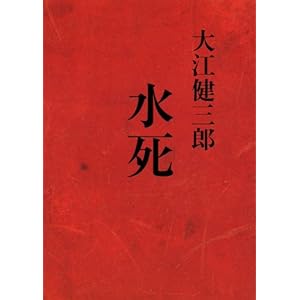
Oe Kenzaburo, Suishi (Death by water, 2009). The latest novel by the Nobel laureate, this one partakes of his characteristic vein of imaginatively rewriting the reality of his own life into a mythic dreamscape. An aging novelist becomes involved with an experimental theater company who have been staging dramatizations of his work. They meet together at the novelist’s ancestral “home in the woods” in Shikoku where the novelist intends to at last complete a long-abandoned novel (Suishi shosetsu) on his father’s death, based on records that have been kept in a suitcase since his mother’s death ten years earlier. In doing so, he hopes to heal wounds opened by his earlier fictional version of his father’s demise, published as Mizukara waga namida o nuguitamau hi (The day he himself shall wipe my tears away, the title of a novella Oe actually published in 1972). The suitcase, however, turns out to be empty, leading to a bout of depression and new tensions within the novelist’s family. The theatrical company goes on to create a performance based on Natsume Soseki’s 1914 Kokoro, using the figure of Sensei in that novel to call into question the ethics of the protagonist. I’m now a little more than halfway through this complex meditation on death, literature, and history, and after Oe’s visit to Chicago last month, I keep hearing his voice in my head as I read the prose silently.
Frank Kermode, The Sense of an Ending: Studies in the Theory of Fiction (1966). One of those classic studies I’ve somehow avoided reading up until now. I’ve been invited to write an article for a special journal issue in Japan on “the sense of ending” in modern literature, and this seemed a good place to start organizing my thoughts on the topic. Kermode explores the various ways we map our place in the world through our imaginations of what the end of history will look like and how this becomes a basic structural element in the literary and non-literary fictions that we live by.

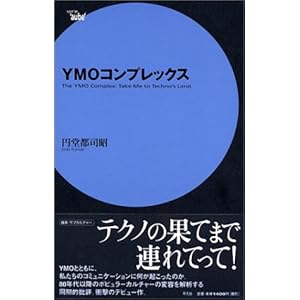
Endo Toshiaki, The YMO Complex: Take Me to Techno’s Limit (2003). An intelligent interpretive survey of the postmodern music and semiotics of Yellow Magic Orchestra, the most important and popular Japanese rock band of the late 1970s and early 1980s.
Sasaki Atsushi, Nippon no shiso (Japan’s thought, 2009). An engaging, personal survey of how the world of Japanese theory and criticism has transformed from the New Academic poststructuralism of the 1980s (represented by such figures as Asada Akira and Nakazawa Shin’ichi) to the contemporary world of anti-academic subcultural studies (e.g., Azuma Hiroki). Sasaki focuses not so much on the content of “thought” as on the shifting modes of its performance.

The Golden Cups Live
The Golden Cups were one of the most powerful and influential of the “Group Sounds” bands that emerged in Japan during the late 1960s. Formed in 1966, they learned their chops as the house band at Golden Cup, a bar for U.S. soldiers in Yokohama. They came of age playing American R&B and garage rock standards before one of the toughest crowds you can imagine: U.S. GI’s on R&R breaks from the Vietnam War mixed with local teenagers from the hardscrabble neighborhoods that surrounded the American bases.
The band made their recording debut in late 1967, scoring major hits with such original numbers as “Nagai kami no shojo” (The girl with long hair) and “Ai suru kimi ni” (To you whom I love), while their albums also featured their wild takes on recent hit songs from the U.S. and U.K. Here’s one of my favorites: their psychedelic freak-out version of “Hey Joe,” featuring Eddie Ban’s stinging lead guitar, Mamoru Manu’s thrash-style drumming, and Louis-Louis Kabe’s supple bass:
By around 1970, Group Sounds as a genre was played out, but the Cups had enough credibility to allow them to survive in the world of 1970s rock. They went through a number of personnel changes, but the basic core remained intact through early 1972. They played their last gigs in Okinawa, appropriately enough given their roots in military base town culture. The members would continue to be active in a variety of bands–keyboardist Mickey Yoshino, for example, formed the influential 1970s band Godiego. There were also a number of Cups reunions over the years, most notably a gig in 2004 that formed the centerpiece of a documentary film, The Golden Cups: One More Time (trailer here). It’s particular fortunate that that documentary was made then, because it captured the band’s lead singer Dave Hirao just before his tragic death in 2008.
The surviving members of the band are carrying on today, both together and in their own bands. Yesterday afternoon, I had the great pleasure of seeing them perform at the 7th Avenue livehouse in Yokohama, not too far from the site of the original Golden Cup bar. It was very much a family affair, with the audience packed with friends and long-time fans. They played a terrific, fun set. It opened with “Got My Mojo Working” and included a number of Chicago R&B classics, such as Paul Butterfield’s “Born in Chicago.” Mickey Yoshino took lead vocals for a soulful rendition of “Whiter Shade of Pale,” part of the Cups’ repertoire since the 1960s. Mamoru Manu shared lead vocals with Eddie Ban on several numbers, including the band’s first two hit singles. The set closed with a high energy rendition of Them’s “Gloria,” complete with an enthusiastic audience sing-along on the harmony.
I had the chance to go backstage and meet the band, because we’re making arrangements to show The Golden Cups: One More Time at a conference at the University of Chicago in late May (details here; more updates coming soon). We’re also hoping that some of the band members will be able to join us in person for that event. If yesterday’s show was any indication, it will be an enormously fun event.
I leave you with video that makes me both sad and happy: the Cups (including Dave Hirao) performing their early hits with none other than the great Imawano Kiyoshiro. Unbelievably, both Dave and Kiyoshiro are gone now, but I hope the Cups keep rocking for many years to come.
This and That: Science and Technology Edition
We enjoyed a quiet Easter. I managed to get to church — but cheated, in that my “worship service” consisted of the Art Hoyle Quintet performance at Hyde Park Union Church, sponsored by the always wonderful Jazz Sundays series organized by the Hyde Park Jazz Society.
Some interesting science and technology news that’s caught my eye lately:
The lunatic notion that genetic codes found in nature can be patented is finally facing skeptical court scrutiny, the New York Times reported last week. For the sake of culture and scholarship, we really need to curb the voracious appetite for infinitely expanding intellectual property claims, and this seems a modest step in the right direction.
Are the problems faced by scientists trying to gear up the Large Haldron Collider actually the work of a Terminator sent from the future in a desperate attempt to head off an unwelcome scientific development? The possibility has been suggested in a series of recent scientific papers, Time magazine reports.
Finally, a whole slew of new technological devices and digital scientific analytical techniques are being applied to baseball. The conclusion from statistical crunching of multi-angle digitized tracking of pitches over the course of an entire season? That good pitchers paint the corners, while bad ones hang it over the plate. Now they’re turning their attention to batters and defenders and will not doubt reach many revolutionary hypotheses, such as declaring that batters should try to hit the ball with the sweet spot of the bat and that fielders should try to catch the ball with both hands. Ah, the marvels of science.
In the meanwhile, play ball! The Twins kick off their season tonight in Anaheim.
Gilberto Gil at Symphony Center
Legendary Brazilian musician Gilberto Gil performed an intimate, touching concert for a couple thousand of his best friends last night at Symphony Center here in Chicago. Performing an all-acoustic set accompanied by his son Bem Gil on guitar (and occasionally tambourine) and cellist Jaques Morelenbaum (whom I know mainly from his previous work with Sakamoto Ryuichi), he gave us an uplifting evening of gently inspiring music–including several audience sing-alongs in Portuguese. The Brazilian contingent was out in force.
Dressed entirely in white, Gil played a couple of what he called “family songs.” “Das Duas Uma??? (“From Two, One???) was composed last year for his daughter’s wedding. She was the last of his five daughters to get married, Gil announced, and the only one to ask him to compose a song for the occasion. He thought and thought about what he should say to the bride and groom on this momentous occasion, and what he came up with was, “good luck!” The second, “Quatro Coisas??? (“Four Things???), was a love song for his wife of thirty years, the theme of which he announced as “no escape!”
I particularly like Gil’s revolutionary late 1960s recordings with Os Mutantes and Caetano Veloso, so a highlight of the show for me was an elegant rendition of “Panis Et Circenses.” Gil’s long-standing interest in the Beatles surfaced at one point, when he slipped a musical quotation from “Penny Lane” into the coda for one of the songs. Also memorable were “Nightingale” and “Năo Tenho Medo da Morte,” the latter performed by Gil alone on the stage, tapping out the rhythm on the body of his guitar and barely touching the strings.
All in all a lovely evening, one that magically coincided with the arrival of spring in Chicago. Here’s video from earlier dates in the current tour:
James Brown Lives!
This and That
The sumo tournament in Osaka has reached the midway point, and as expected sole yokozuna Hakuho (7-0) has dominated. But two promising rikishi have also stepped up to take advantage of the opening created by yokozuna Asashoryu’s sudden retirement last month: ozeki Harumafuji, the former Ama and a disappointment since his promotion to ozeki a couple of years back, is now 7-0, as is sekiwake Baruto, who could win promotion to ozeki with a championship in this tournament. Baruto in particular has been impressive: he just looks much more serious about things this time around, his goofy grin a thing of the past. Down in the maegashira ranks, Tokitenku is also 7-0, but that’s just a bunch of smoke and mirrors.
In the meanwhile, spring has arrived in Chicago (never mind those snowflakes falling outside the window as I write these words). I celebrate by listening to Minnesota Twins spring training games in the afternoon at my office. I’m pretty optimistic about the coming season, despite noises being made by local White Sox fans….
In the category, “It’s bloody well about time”: Universal betting on lower prices to boost CD sales.
Ray Davies continues to wow them on his current tour. MSN.com reports that “Ray Davies rules on second night of SXSW.”
The coming week should be a hectic one for me. I’m in Philadelphia on Monday and Tuesday for the NCC 3D conference, then up to Princeton for the “Rethinking ‘Hihyo’: Postwar Literary Criticism and Beyond” workshop, then back down to Philadelphia on Thursday for the 2010 AAS Annual Meeting.
I leave you with the late Alex Chilton. I saw him play with the reunited Big Star seven or eight years ago at Royce Hall on the UCLA campus. It was a joyous occasion, especially when they covered The Kinks’ “‘Till the End of the Day.” Ray Davies dedicated that song to Chilton in his performance at SXSW this week (where Chilton had been scheduled to play) and spoke from the stage about how Chilton had visited him in the hospital after he was shot in New Orleans. A great songwriter and a wonderful voice: so long, Mr. Chilton.
Ray Davies at the Riviera, 3/13/2010
It was a terrific show last night, powerful enough to sweep away any lingering mental and spiritual cobwebs. It was, in short, just what I needed. After a spirited opening set by LA band The 88, Ray took the stage with his accompanist, Bill Shanley, and opened with the wistful “This is Where I Belong.” He followed up immediately with the acoustic blues version of “You Really Got Me” that he developed for The Storyteller show, the number morphing halfway through into “I Need You,” and we were off and running. He asked the audience how they were feeling and then added, “Do you want to know how I’m feeling?,” whereupon he burst into song: “Well, baby, I feel good” (“‘Till The End of the Day”).
He played tunes from all stages of his career, including early (“Too Much on My Mind,” “Everybody’s Gonna Be Happy,” “Where Have All the Good Times Gone?,” “Sunny Afternoon,” “I’m Not Like Everybody Else,” “See My Friends,” “Dedicated Follower of Fashion,” “Tired of Waiting”), mid (“Two Sisters,” “Victoria,” “Apeman,” “Twentieth Century Man”), late (“The Hard Way”) and solo (“In A Moment,” “The Tourist”). Highlights included two songs I’d never heard live before, “Nothin’ in This World (Can Stop Me Worryin’ ‘Bout That Girl)” and “Postcard from London.” The latter, released just a few months ago as a duet with Chrissie Hynde, worked remarkably well in the stripped down version Ray performed. We were also treated to Ray singing a verse of “A Well Respected Man” in his best Johnny Cash voice, as well as his imitations of David Letterman (so-so) and Paul Schaffer (pretty good), and a touch of an Irish folksong in honor of St. Patrick’s Day–Shanley played brilliantly on this and everything else through the evening. A high energy version of “All Day and All of the Night” closed the acoustic portion of the show.
Ray was in fine voice and seemed in good spirits throughout. For this Kinks’ fan, it’s been gratifying these past few years to see him relax and simply enjoy the respect and adulation he’s earned. The 88 returned to the stage to back Ray for a powerful final set that lit the joint on fire: “You Really Got Me” (reprised with heavy guitars and drums), “David Watts,” “Celluloid Heroes,” “Dead End Street,” “Low Budget,” and finally “Lola.” After playing most of the show from a sitting position, during the closing set Ray was jumping up and down and racing across the stage, looking nothing at all like a 65-year-old senior citizen.
The crowd was a typical Ray/Kinks mixture: young ‘uns in their twenties, gray hairs in their seventies (some literally with canes), and everything in between. I rode the Red Line El train home with a big grin on my face. For the umpteenth time, I’d participated in the big communal singalong on the chorus to “Lola”: that’s the closest thing there is to a religious ritual in my life.
Fan videos from the show:
This and That
On the dark side, tomorrow we take our first step into that gray new world known as post-Asashoryu sumo. Yokozuna Hakuho is the prohibitive favorite to take home the title in Osaka (has it really been a year since I was there in person for Day 8 last March, watching Asashoryu knock off Baruto in a fierce match?). Ozeki Kotooshu seems the only possible threat to Hakuho’s championship, and if there’s one thing we’ve learned about Kotooshu over the years, it’s that he shrinks like a banana souffle anytime he gets close to something good. Perhaps his recent marriage will change things, but my money’s on Hakuho (ho-hum: the subtle sound of a middle-aged man yawning).
Even darker, this is the week we learned the Minnesota Twins may have to live without relief ace, Joe Nathan. There are some viable replacement candidates already on the roster, including the marvelous Pat Neshek, back after an injury-related break of nearly two years, and Francisco Liriano has been tantalizingly good so far. But the loss of Nathan has Twins’ fans literally offering up parts of their own bodies in hopes of resuscitating Nathan’s pitching arm.
On the bright side, I’m taking Satoko to see Ray Davies in concert tonight at the Riviera. The last show we saw by him here in Chicago, a little more than a year ago, was transcendent, and reports from previous gigs on the current tour are quite positive. Here’s a little taste of what’s in store for me:
