

Today’s Musical Discovery
This morning, I poked my head in at the website for the World Happiness music festival to see who was on the bill this year. This is the annual one-day event organized by Yellow Magic Orchestra, with YMO as headliners and a changing roster of supporting artists, all hand-picked by YMO. We very much enjoyed the 2010 edition, and we might well be in Tokyo again this August.
This year’s show will take place on August 12. In addition to YMO, the artists on the bill announced so far include Grapevine, Original Love, Tokyo No. 1 Soul Set, and Sakamoto Miu. The last name was entirely new to me, so I did some checking around. Then it clicked: I’d heard in the past from friends that the daughter of Sakamoto Ryuichi (YMO) and Yano Akiko was also a musician. It’s her, of course.
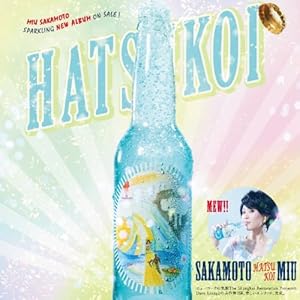
Born in 1980 during the heyday of YMO’s fame, Miu released her first full album in 1999. She now has six albums to her credit, include the just-released Hatsukoi. The latter includes her latest single, on which she sounds very much like a genetic hybrid of her mother and father’s styles.
Perhaps I’ll be hearing more of her work this August in Yumenoshima Park in Tokyo.

The Current Reading List
George Eliot, Silas Marner (1861). My first time to read this since ninth grade English class with Mr. Sanborn. My vague memories of the story revolved around the child Eppie and her sunny influence on the title character; I was surprised to realize she doesn’t appear until halfway through the book. The seemingly realistic depictions of daily life in small-town England before the Industrial Revolution are charming–and the brief visit to a darkened factory city near the end suitably haunting. I’d like to sneak this onto the syllabus for a seminar I’m planning to teach next year on the philosophy of money and literature. Eppie’s angelic golden locks release Silas from his evil worship of gold, leading to (quite literally, the last line tells us) the happiest of possible endings.
Kira Morio??????, Yurei: Aru yonen to seishun no monogatari_ ??????????????????????? (1954). Kita’s debut novel, a lyrical collage of fictional childhood memories. It has highly comical moments, but at other times is quite melancholic–death always hovers in the background. With hardly any plot to speak of, the charm comes primarily from polished depictions of a child’s sensibility. A passage early on about how the spines of books on the shelves in the father’s study seemed like faces looking down at the hero brought memories of my own childhood flooding back: I’d forgotten how vividly I could recall the books that sat on my own father’s shelves.
Greg Robinson, After Camp: Portraits in Midcentury Japanese American Politics and Life (2012). Most histories of Japanese-American life focus on the wartime internment camps and the developments that led to them. Robinson’s welcome new study takes up the relatively unexplored question of what happened next. He traces the process of release from the camps, one driven by an ideology of “assimilation” that sought to prevent the reappearance of concentrated pockets of Japanese-American populations on the West Coast. (with the surprising result that Chicago briefly boasted the largest population of Japanese-Americans in the continental U.S.). He also provides very interesting material on the relations between postwar Japanese-Americans and other minority ethnic groups, in particular African-Americans and Mexican-Americans. Fascinating.
Leela Gandhi, Affective Communities: Anticolonial Thought, Fin-de-Siecle Radicalism, and the Politics of Friendship (2006). A remarkable study of late nineteenth and early twentieth century nonconformist radical movements in Britain (vegetarianism, aestheticism, spiritualism and homosexuality, among others) as experiments in alternate, explicitly anti-imperial, forms of relationship–as, in other words, experiements in “friendship.” Since writing my dissertation on, among others, Upton Sinclair, I’ve had a strong interest in such movements in the U.S., and Gandhi’s insightful analysis finally helps me make sense of their specifically geopolitical stakes. I now see why The Jungle necessarily includes condemnations of the imperialist Russo-Japanese War alongside its more famous exposé of the horrors of meat-eating.
“What March 11 Means to Me”
This past weekend, we hosted a remarkable event here at the University of Chicago: “What March 11 Means to Me: A Symposium in Honor of Norma Field.” A large audience turned out both days to hear a remarkable array of speakers from Japan reflect on the ongoing disaster in the Tohoku region of Japan.
Ryusawa Takeshi, former editor-in-chief for the Heibonsha publishing house and currently one of the central figures in the East Asia Publishers Conference, was the first speaker on Saturday. He reflected on the role of liberal, progressive journalists in the 1950s in disseminating the doctrine of “Atoms for Peace” in Japan and traced the fascinating history of the benign-sounding word genshiro?(?????), the Japanese term for “nuclear reactor” that might more literally be translated as “atomic hearth.”
He was followed by Yokoyu Sonoko, a child psychologist and a leading voice on such issues as bullying and hikkomori syndrome (social withdrawal syndrome), who spoke on the mental health costs of the earthquake, tsunami, and nuclear disaster. Her talk included a number of moving stories about how families and individuals already struggling with psychological difficulties tried to cope with the disaster. She also described the rising incidence of PTSD and other forms of anxiety in the months following 3/11. She concluded by speaking about the sense of “hopelessness” shared by many in today’s Japan and on the possibilities for building new connections based on it–especially in response to the very real danger of fascism in today’s Japan.
The last speaker on Saturday was Takahashi Tetsuya of the University of Tokyo, one of Japan’s leading contemporary philosophers and a native of Fukushima Prefecture. He spoke quite movingly of his childhood in the region and his concerns for its future. Using the example of the recent People’s Tribunal trial of Tokyo Electric Power (TEPCO) and its management, he unpacked the complexities of the kinds of responsibility we need to consider in remembering 3/11. Of course, primary responsibility lies with what Takahashi called the “nuclear mafia,” the business and governmental figures who promoted the myth of absolute safety while neglecting to secure adequate safety measures. But those who allowed themselves to be deceived also bear some degree of responsibility, as do those who had remained indifferent while enjoying the benefits of cheap electricity generated by what Takahashi has called the “sacrificial system” of contemporary Japan.
Komori Yoichi of the University of Tokyo, one of today’s leading scholars of modern Japanese literature and one of the prime figures in the movement to preserve the anti-war Article 9 of the Japanese constitution, was the first speaker on Sunday. He provided a moving account of his and his family’s personal experiences on 3/11 and the days that followed, arguing for the importance of claiming the embodied experience of sense perception (taiken) of the ‘event’ as a kind of experience (keiken) shared with others through language and dialogue. He situated the events of 3/11 against the history of postwar Japan and of his own lifetime, going back to his birth at the time of the Lucky Dragon Incident and the initial promotion of “Atoms for Peace” as an American Cold War ideology.
Amamiya Karin, a well-known activist in the “precariat” and anti-nuclear movements, was the final speaker. She talked about her experiences traveling in the Fukushima region and the kind of unreal reality people now encounter there–when, for example, Tsutaya video rental stores now also offer to lend Geiger counters for personal use. She focused in particular on divides opening up among the affected populations–resentment, for example, that those who lived within the mandatory evacuation zone get greater compensation than those living just outside of it. As a result, the focus of popular anger is shifting away from TEPCO and the government to fellow victims. But she also discussed tactics being used in recent demonstrations to bring together disparate strata into a single, unified force, and showed videos from several recent protest marches.
It was a memorable event and a great tribute to my colleague, Norma Field. She will be retiring from the University of Chicago at the end of this academic year–though we know she will remain an active force for many years to come. Without her, there’s no way we could have brought together all of the people who made the symposium such an intense and inspiring occasion.
Postscript: Here’s local television station WGN’s coverage of an event commemorating the Fukushima disaster last Sunday right after the symposium, including interviews with Amamiya Karin and Norma Field.
Chicago (History Museum) Rocks!
The Chicago History Museum is launching “Chicago Rocks!,” a series of lectures, performances, and neighborhood tours celebrating the history of popular music in the Windy City.
Grab your dancing shoes and groove with us this Spring for a slew of events that celebrates Chicago’s rich musical past. Over the course of four weeks, we’ll explore various genres that have dominated the Windy City’s sound scene. From lectures and concerts to tours and dinners, the series will have something for any music aficionado and lover of Chicago history.
It’s a great range of events, covering R&B, soul, rock (both mainstream and indies), punk, house and hiphop. The series runs from next week through mid April, ending up somewhat incongruously with a big John Cage bash–the avant-garde composer apparently spent a fair amount of time here. The full schedule of events is available here.
One of the scheduled speakers is the “Duke of Earl” himself, Gene Chandler. I’ve always been a sucker for his 1970 hit, “Groovy Situation.”
Korean Punk Rock

The documentary “Our Nation: A Korean Punk Rock Community” (39 min., 2002) is now available on DVD for private home viewing–and it’s just twenty bucks. You can also stream it for just $1.99. (Institutions and libraries can also purchase the film here.)
Through the eyes of two young college age fans, we journey through the underground punk rock scene. The small club “Drug” features bands with names like Crying Nut, No Brain and Weeper, and the all-female band Supermarket. To Americans the flashing lights, stomping bodies, blaring sounds and angry incantations are nothing new. But seeing it in an Asian culture known for restraint raises many questions. Sociology professor Cho Hae Joang provides a socio-historical overview of the youth subcultures in Korea, and the emergence of consumer capitalism with the concomitant economic crisis of the late 90’s.
Crying Nut subsequently went on to fame and fortune, but the film captures them and their fans at the beginning, playing in a small basement club in Seoul. I had the pleasure of introducing the film at one of its first-ever screenings at UCLA back when it was initially released, and I vividly remember the brilliant way it captured the feel of a burgeoning local music scene. Recommended.
Featured Book of the Week
Sayonara Amerika, Sayonara Nippon: A Geopolitical Prehistory of J-Pop is the “featured book of the week” on the Columbia University Press blog. Among other things, they’re giving away a free copy, but hurry: the contest ends this Friday. Details are available here.
In celebration, let me leave you with “To My Dear Friends” (Waga yoki tomo yo), a 1975 hit for Kamayatsu Hiroshi. Kamayatsu is one of the heroes of my chapter four, “Working within the System: Group Sounds and the Commercial and Revolutionary Potential of Noise.” The tune, composed by Yoshida Takuro, was the biggest hit of Kamayatsu’s solo career, which followed his stint as resident musical genius for 1960s’ garage rockers, The Spiders.
Kamayatsu was the son of Tib Kamayatsu, a Japanese-American jazz singer whose career in Tokyo dated back to the 1930s. He debuted in the late 1950s as a country-western and rockabilly singer before joining the Spiders. He was one of the first Japanese rock-and-rollers to really “get” the new Merseybeat sound when it exploded onto the scene in 1964 and went on to compose many of the Spiders’ hits. In his seventies now, “Monsieur” Kamayatsu remains an active force on the Japanese music scene today. One of my biggest thrills as a music fan came in 2006, when I ended up sitting a couple of rows away from him in the balcony for a show by the reunited Sadistic Mika Band. It took enormous will power to stop me from cornering him to gush about how much I love his work.
Incidentally, Kamayatsu was (and is) a huge Kinks fan. Listen to the opening riff from the Spiders’ 1966 recording of “Little Roby,” lifted more or less directly from the Kinks’ “Set Me Free.”
March 11: One Year Later
Next week marks the first anniversary of the March 11 earthquake, tsunami, and nuclear disaster in Japan. In recent days, we’ve been learning that the situation was in fact far more dire than the government or Tokyo Electric were willing to admit at the time. It’s come out recently that the Japanese government was even considering an unthinkable scenario: evacuation of Tokyo. The New York Times:
in the darkest moments of the nuclear disaster, Japanese leaders did not know the actual extent of damage at the [Fukushima Daiichi Nuclear Power] plant and secretly considered the possibility of evacuating Tokyo, even as they tried to play down the risks in public.
Just today, a newly issued scientific report concludes that the total amount of radiation released into the ocean near Fukushima was likely much greater than previously estimated. The Asahi Shinbun:
A mind-boggling 40,000 trillion becquerels of radioactive cesium, or twice the amount previously thought, may have spewed from the crippled Fukushima No. 1 nuclear power plant after the March 11 disaster, scientists say. […] The figure, which represents about 20 percent of the discharge during the 1986 Chernobyl nuclear disaster, is twice as large as previous estimates by research institutions both in Japan and overseas.
The disaster touched our own family in many ways. My wife was born and raised in Sendai, a city in the center of the affected region. I have lived there on three different occasions. In the early morning hours of March 11 last year, we watched in horror live pictures of the tsunami sweeping over neighborhoods that we know well. Fortunately, none of my in-laws were injured or killed. We did lose some very dear friends, though. And in the year since, we have watched old classmates, colleagues, and friends cope with the loss of children, spouses, parents. Their resilience has been nothing short of astonishing.
We are marking the anniversary with a number of events here at the University of Chicago. Earlier in the year, we hosted an exhibit of photographs from the region, highlighting the scale of the disaster and the enormous energy that has gone into the rescue and recovery efforts. (The same exhibit will be on display at UCLA’s Fowler Museum, March 4 through April 15: details here.)
On March 9 (7:30 p.m., Coulter Lounge in International House), we’ll host a free public screening of an acclaimed new documentary, “Fukushima: Memories of a Lost Landscape” (?????????-??????????????????) with director Matsubayashi Yojyu in attendance. Details are available here.
Then, on March 10-11 we’ll host a major conference in honor of my colleague, Norma Field, who will be retiring from the university this summer. “What March 11 Means to Me: A Symposium in Honor of Norma Field” will feature five prominent public intellectuals and activists from Japan, each speaking on the personal and pubic dimensions of the disaster and its ongoing impact. The line-up of speakers is simply amazing:
Komori Yoichi: scholar of Japanese literature and leader of the movement to preserve Article 9
Ryusawa Takeshi: former editor-in-chief of Heibonsha, one of Japan’s most important publishing houses
Takahashi Tetsuya: a native of Fukushima and one of Japan’s leading scholars of ethics and philosophy
Yokoyu Sonoko: a well-known clinical psychologist and advocate for children’s rights
A schedule for the event and profiles of the participants can be found here.
Finally, on May 5 we will be hosting “Atomic Age II: Fukushima,” with two very special guests from Japan: Koide Hiroaki of the Kyoto University Reactor Research Institute, a scientist who became something of a public hero for his willingness to speak frankly about the risks of nuclear power, and Muto Ruiko, an activist in anti-nuclear citizen movements from Fukushima. Details are available here.
Remarkable progress has been made in recovery over the past year. People from the region I’ve talked to express deep gratitude for the support they’ve received from around the world. But the disaster continues: rebuilding efforts in the tsunami-affected region have barely begun, and the Fukushima nuclear disaster is still unfolding, despite glossy governmental declarations that the situation is under control. Shutting down the reactors and decontaminating the area will take decades. It will take many years to assess the real human cost, too: I dread thinking about what rates of cancer incidence in the region will look like six or seven years from now.
I hope you can join us for some of these events. Please keep the people of Tohoku in your thoughts. One way we can help is to make sure that we all learn the lessons that the disaster is trying to teach us.
Detroit Metal City

This 2008 film came up in a discussion yesterday following a workshop I led at DePaul University for K-12 teachers on using Japanese popular music in the classroom. I did a little web surfing after getting home and learned that it is now available on DVD in North America.
It’s a funny, cartoonish (not surprising, since it’s based on a successful manga) movie about a sensitive singer-songwriter (Matsuyama Ken’ichi) who wants only to record sunny Shibuya-kei style ballads about love and trendy Tokyo lifestyles, but who ends up trapped as lead singer for a death metal band. His fans worship him as the spawn of Satan, but all he cares about is trying to win over the squeaky clean girl (Kato Rosa) he’s had a crush on since college. Gene Simmons turns in a nice cameo appearance as the legendary American death metal icon who challenges our hero to a final showdown for supremacy.
Everything is played in a silly, over-the-top manner, dulling the emotional impact when it tries to go sentimental at the end. But the pop and metal songs are fun, affectionate parodies of the two genres. Around the time the movie came out in Japan, they actually released CDs purporting to be music by the fictional bands from the film.
Mark Schilling’s review for the Japan Times is available online here. Here’s a trailer for the film:
Re-Staging “101st Proposal” in the Edo Period?

As unlikely as it may seem, the hit 1991 Fuji Television series 101st Proposal (see chapter six in my Sayonara Amerika, Sayonara Nippon) is being revived next month as a stage play in Fukuoka. Takeda Tetsuya and Asano Atsuko will revive their roles from the original series–but the story is being reworked into a jidaigeki: a samurai drama set back in the Edo period.
The Asahi newspaper reports (Japanese-language only) the play will run at the Hakata-za theatre in Fukuoka, March 2-28, with possible runs in Tokyo and elsewhere to follow. No word on whether the piece will include a shamisen version of the theme song from the show, Chage & Aska’s “Say Yes.”
Now Available: Sayonara Amerika, Sayonara Nippon–The Book

My new book, Sayonara Amerika, Sayonara Nippon: A Geopolitical Prehistory of J-Pop, has just been published by Columbia University Press. It’s available in paperback through your local neighborhood bookstore, and there’s also a Kindle e-book version. Readers in Japan can order it through www.amazon.co.jp
Stay tuned: I’ll soon be adding a web feature over at www.bourdaghs.com including sound samples and other online resources relevant to the book.
Meanwhile, to whet your appetite, here’s Kasagi Shizuko (the heroine of chapter one) performing her signature number, “Tokyo Boogie Woogie”:
